Home
Click to donate
Quakers empowering the people of Nicaragua to empower themselves
Projects Volunteers Delegations Nicaragua Quaker House About ProNica News
10 March 2010
 

ProNica projects

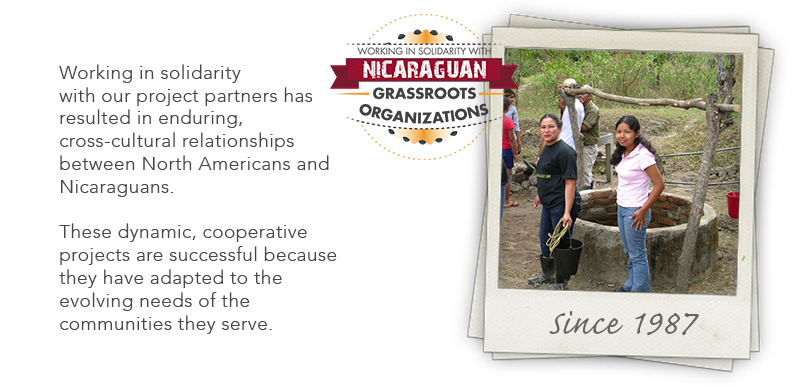
Since 1987 ProNica has forged partnerships in Nicaragua with community-based grassroots organizations in poor urban barrios and rural areas. These project partners provide services arising out of local needs in health, education, agriculture, community building.

2009 GRANT AWARDS

ProNica project partners submit grant proposals each fall. ProNica Nicaraguan consejo, or advisory committee, reviews each proposal and makes recommendations. The stateside projects sub-committee reviews translated proposals and consejo recommendations and sends their recommendations to the full committee. In December the full committee approves grant awards which are disbursed in January from donated funds. Even in these uncertain economic times, we strive to support our project partners financially so they can continue to empower themselves. ProNica awarded $55,722 for 2010:

  • $6,500 to Casa Materna for medical procedures and utility bills
  • $4,501 to Acahualinca Women’s Center for medical procedures and supplies
  • $865 to Casas de los Niños for medical procedures and education
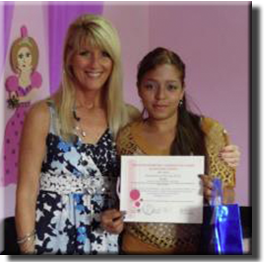
  • $3,970 to Acahualinca Beauty School for teacher and equipment
  • $4,205 to Mama Licha Clinic for medical procedures and supplies
  • $300 to Acahualinca Library for textbooks and supplies
  • $1,174 to Acahualinca Library for supplies
  • $15,445 to Yahoskas for food
  • $18,000 to La Chureca for food
  • $1,927 to Los Quinchos for their library

HEALTH

Up to 80 percent of households in the poorest urban barrios and rural areas of Nicaragua are headed by women who may have become mothers as young as age 14. Pregnancies often continue throughout their childbearing years. With little or no education, training or employment opportunities, many mothers scavenge in dumps, send their children to beg on the streets or resort to prostitution. Many women and children go hungry. ProNica has supported several projects that address these problems.

The Acahualinca Women’s Center in Managua focuses on women’s reproductive health by providing consultation, treatment, and education. Casa Materna in Matagalpa cares for rural women with high-risk pregnancies by providing pre- and post-natal medical care, education and tubal ligations. Casa de los Niños in San Ramon provides natural medicines and education. Mama Licha’s Clinic in Esteli provides midwife services to poor women.

Los Quinchos is a multifaceted rehabilitation program for glue-sniffing street children with an intake house in Managua and residences and workshops in San Marcos and Granada. ProNica has supported natural medicine clinics in Achuapa and Casa de los Niños in San Ramon and a health clinic in remote Mulukukú. In Limay, ProNica has purchased hundreds of ceramic water filters to reduce disease from waterborne parasites, the leading cause of death in infants and young children.

EDUCATION

More Nicaraguan children attend school in recent years. Most of these students come from large families who are scarcely able feed and clothe them, let alone pay uniforms and textbooks. Even though the government declared that public education and health care are free, financial resources are still lacking, particularly in small towns and poor neighborhoods. Most classrooms lack textbooks, therefore textbooks in local libraries provide valuable resources for learning.

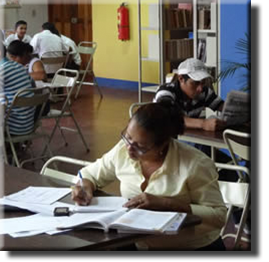
ProNica supplies funds for libraries to stock current textbooks and other materials. These libraries provide a safe learning environment outside of school and offer cultural enrichment. ProNica supports urban libraries in three poor barrios of Managua. With a new matching-funds partnership with Books for Life, ProNica has helped three libraries obtain $5000 worth of books and two computers.

AGRICULTURE

In the small rural community of Achuapa, ProNica helps support an organization that works with poor farmers. The Cooperative Juan Francisco Paz Silva is better known to locals as the Tienda Campesina.

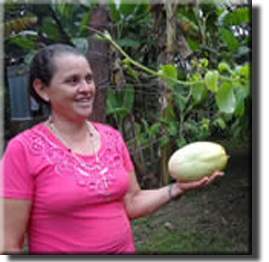
The Tienda is a cooperative offering agricultural extension agents, credit, a small store, and a model farm. It buys and processes the local sesame crop for sale abroad. Supported by ProNica and the Canadian Friends Service Committee, the coop has completed an ambitious 13-year project to convert sesame and other crops to organic production. The goals of ending farmers’ reliance on costly, harmful fertilizers and pesticides and fetching higher market prices were realized. Seventy-five farmers participated and benefited. Fifty women in highlands villages now grow herbs on 17 acres in small individual gardens. Medicinal hibiscus flower makes delicious and healthy Flor de Jamaica tea, sold in local and international markets.

SERVICE

ProNica provides volunteer opportunities in Nicaragua to bring help and hope to the lives of the people served by our project partners. Volunteers typically work in-country for six months or more, and live with families in the communities they serve.

ProNica hosts college delegations for 15 students for two or three weeks and a ten-day Friends Witness Tour for smaller groups of four to six. Participants visit the community-based projects that ProNica assists and meet those who work on the “front lines” every day.

ProNica provides opportunities for individuals to volunteer in Nicaragua to bring help and hope to the lives of the people served by our project partners. Volunteers typically work in-country for six months or more, and live with families in the communities they serve. Visit our Volunteers and Delegations section for more information.

Projects
See ProNica in action
 
HOME | PROJECTS | NICARAGUA | QUAKER HOUSE | ABOUT PRONICA | NEWS | CONTACT US | DONATE | SITE MAP
Copyright © 2010 ProNica, Inc. • 130 19th Avenue SE • St. Petersburg, FL • 33705 • 727-821-2428
Webkeeper